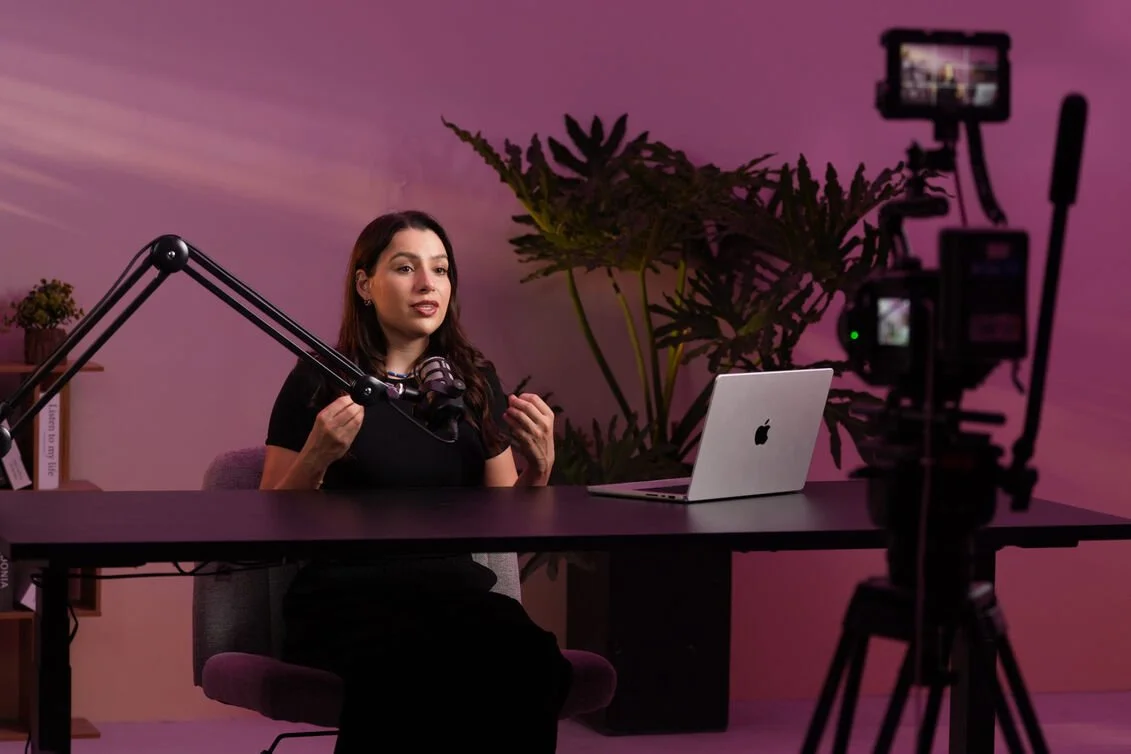
Sophia Spencer
Psychotherapist, Speaker & Specialist in Belonging, Visibility & Social Anxiety
I speak internationally on social anxiety, belonging, visibility, confidence, identity, group psychology, and the psychology of being seen.
My work blends clinical psychology, social psychology, and political understanding of power and group dynamics — a perspective rarely found in the therapy or speaking world.
What Makes My Perspective Different
I combine clinical expertise with political and social identity insight — a rare blend that allows me to explain social anxiety through the lenses of belonging, culture, group behaviour and power.
It makes my talks deeper, clearer and more relevant.
Before I became a therapist, I knew the terrain of belonging, identity and social anxiety firsthand.
Growing up, I attended seven schools, constantly the new kid trying to decode the unspoken rules of every new environment. With separated parents from completely different backgrounds, I spent my childhood code-switching between versions of myself depending on which house I was in.
Being part English, part Seychellois, I never knew what identity was “acceptable.” Too different for some spaces. Not different enough for others.
It was social anxiety — the kind shaped by groups, identities, hierarchies, cultures, and belonging.
I became an expert at reading rooms, adjusting myself, and performing belonging. But I lost the sense of who I was when I wasn’t trying to fit in.
Academic life reflected this — I fell behind, dropped out of A-levels once, self-taught them the second time, and got un-enrolled because my attendance was so low.
Fast forward 15+ years: I’m a qualified therapist with four degrees, senior NHS experience, and a deep belief that your difference is not your deficit - it’s your authority.
I share this so you know: I don’t just understand this work. I’ve lived it, studied it, and I teach it from every angle — psychological, social, cultural, and political.
A Speaker Who Understands Belonging And Anxiety From Lived Experience — and From Every Angle of Psychology
Before becoming a psychotherapist, my academic background was in Politics, where I studied:
social identity and group behaviour
power dynamics
in-groups and out-groups
belonging and exclusion
hierarchy and social meaning
how society shapes the self
Most therapists focus only on the internal experience.
But confidence, belonging, and visibility are not just individual issues, they are social, cultural, relational and systemic.
My talks explore how:
social anxiety is shaped by the environments we move through
belonging wounds are created by group dynamics, not personal weakness
visibility fear often reflects power structures, not mindset
people-pleasing is a survival response to social hierarchies
identity, culture and class shape self-belief
By combining clinical psychology with social psychology and political insight, my lens is both:
deeply personal
and structurally aware
This is why audiences often say they feel “finally seen” - because I name the things they thought were their fault but are actually part of the human social experience.
Before Therapy…
Speaking Topics
Confidence, Visibility & Authenticity
Social / Performance Anxiety in Context
A unique blend of clinical psychology, social psychology and political insight: understanding anxiety through neuroscience, groups, power and in-/out-groups, not personal weakness.
Belonging & Anxiety: Why We Feel Unsafe Being Seen
A deep dive into the psychology of belonging, identity, group dynamics and why visibility triggers the nervous system.
The Psychology of Belonging
How culture, class, power and early social experiences shape confidence and internal authority.
Power, Groups and Social Dynamics
Power, Identity and Confidence
How class, culture, role, race, gender and environment influence confidence, belonging and visibility.
In Groups, Out Groups and the Social Brain
Why some spaces trigger anxiety, why others don’t, and how group hierarchies shape self-belief.
Psychological Safety At Work
Understanding how visibility, hierarchy and social signalling affect communication, confidence and team contribution.
Public Speaking: Leadership
Public Speaking With Ease
Evidence-based tools from CBT, somatics, EMDR and Polyvagal Theory.
Confidence in Visible Professions
How to stay grounded and authentic under public pressure and visibility.
Leading Authentically
How to show up in leadership roles without performing or shrinking into “acceptable versions” of yourself.

Get a sense of my style! Listen to my podcast Just Be on any platform.
An educational psychology podcast on understanding your social brain and feeling seen.







-
Forgetting Cultural Differences
Keep in mind that eye contact norms vary significantly from one culture to the next. “In many Western cultures, direct eye contact is valued as a sign of confidence and engagement,” Spencer says. “However, in some other cultures, prolonged eye contact may be considered disrespectful or confrontational, particularly with elders.”
Link: https://www.verywellmind.com/eye-contact-mistakes-8770892
-
“It’s definitely one of the first studies I’ve seen that has said it’s better to be connected when you’re alone rather than not at all,” Spencer said. “What I see with my clients is most people feel completely overwhelmed by the level of social interaction we have today, both in person and on social media. So I assumed that their finding would be people want to be in total solitude.”
Link: https://www.health.com/solitude-type-restorative-study-8770937
-
Similarly, Sophia Spencer, a specialist social psychology and mental health psychotherapist at Socially Fearless, suggested creating more opportunities for social laughter.
“In one of the first studies investigating the neuroscience of shared laugher, researchers discovered that social laughter leads to endorphin release in specific brain regions,” she told Healthline. “Endorphins alleviate pain, lower stress, and boost mood.”
Spencer explained that social laughter can play an important role in supporting mood, but it also reinforces and maintains relationships, “which buffers against stress and low mood. So, pro-actively create opportunities for laughter can help boost your January mood and ward off the January blues.”
-
During adolescence, appearance-based insecurities are extremely prevalent. While height might not be the primary concern, Sophia Spencer, a psychotherapist specializing in social psychology, tells Yahoo Life that it is “a particularly vulnerable issue” because it cannot be changed.
“Unlike other physical insecurities, such as acne or hair loss, height is immediately visible and unable to be modified or concealed. This can mean during adolescence, tall girls feel constantly physically exposed, have heightened self-consciousness and likely receive unwanted comments about their height,” she says.
-
Feature in WebMDs Living Well After 50+ guide (page 20).
View Here.
Commentary Examples
Get in touch.
Looking for expert insights on social anxiety, group dynamics, or modern connection?
As a social anxiety specialist therapist, I provide accessible, evidence-based commentary that helps your audience understand the complexities of social life and relationships in today's world.
Share your media inquiry here, or email directly at sophia@sociallyfearless.com and I'll get back to you within 24-48 hours.