
The Authentic Speaking Club: Led by a specialist therapist and coach.
Join from any timezone.
Speak up in groups, without anxiety or pretending to be confident.
Let go of perfection, and discover that you can be fully yourself, even with anxiety, when speaking in front of others.
What Happens When You Practice Speaking While Anxious

Before
After

Is it for me?
✅ This group is likely a good fit if:
speaking in groups or publicly brings up anxiety, self-consciousness, or fear of judgement
you freeze, blank, or monitor yourself when attention is on you
you want to speak without forcing confidence or performing
you want to be more authentic
the issue isn’t what to say, but what happens inside when you’re seen
❌ This group may not be the right fit if:
you’re mainly looking to improve sales, persuasion, or communication strategy
your focus is confidence skills, presentation technique, or performance outcomes
you feel safe being authentically you
speaking feels hard primarily because you don’t knowwhat to say
How It Works
What our members say…
What To Expect:
Anxiety and somatic education
A mini-lesson at the beginning of each group to understand anxiety responses in the body and learn ways to stay present while speaking, grounded in principles from CBT and somatic therapy.
Each week we explore a different theme that impacts speaking confidently.
Speaking Practice
Every session gives multiple opportunities for everyone to speak, with the group capped at 6 people so each voice is heard.
Tailored Exposure Exercises
Gradually working with situations that trigger anxiety at your pace.
Exposure is always gradual and optional - you’re never forced to do anything you’re not ready for.
Some members also choose to attend a monthly high-pressure practice session, designed to help you stay regulated during significant interruption, questions, and challenge.
Meet The Team
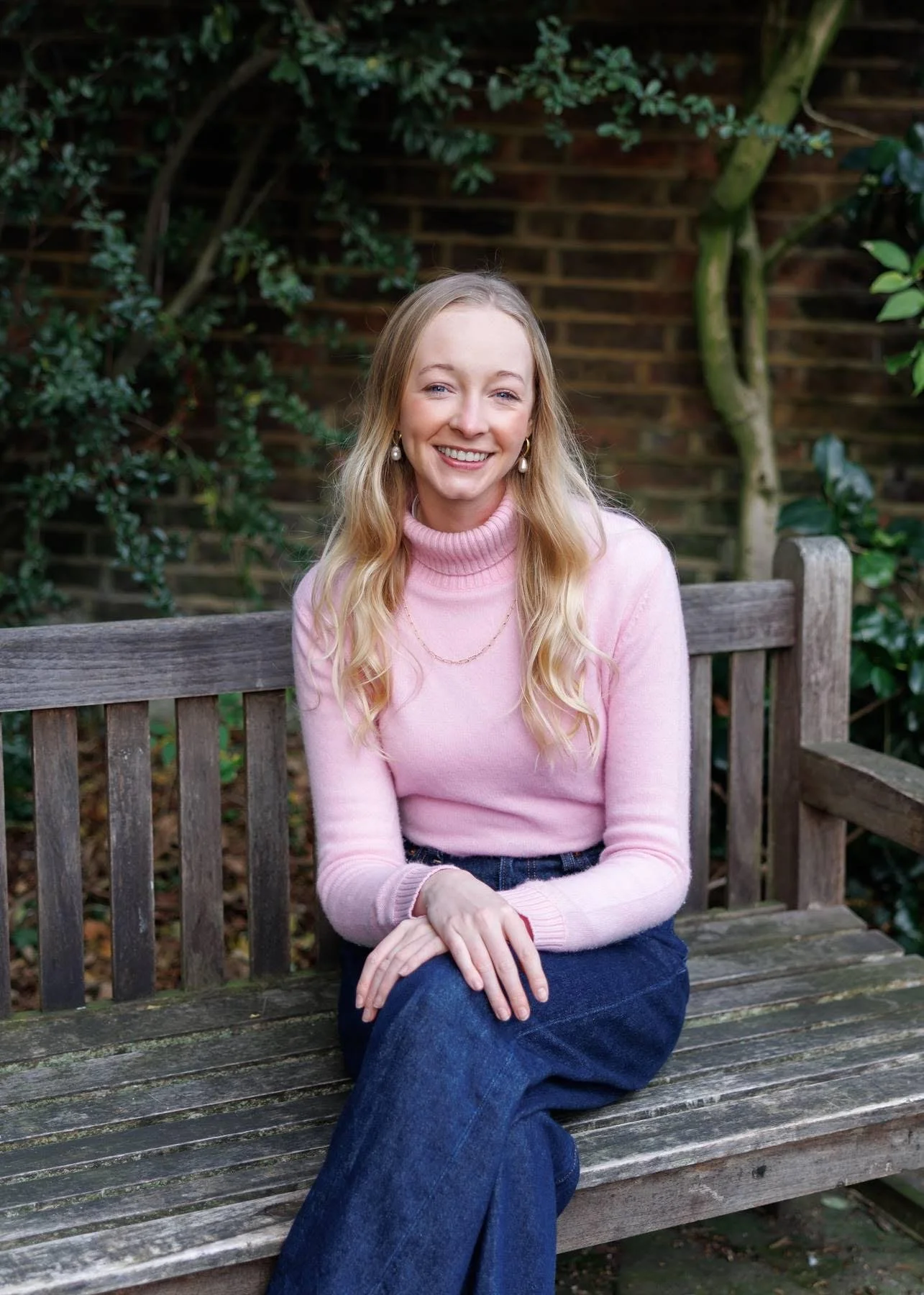
Emily Hill
Thursday Class
Emily is an accredited therapist passionate about helping you become confident in who you are. You can expect her classes to feel friendly and safely challenging.
Accredited CBT Therapist
Sophia Spencer
Wednesday Class
Sophia created the class as a space separate from performance based public speaking groups for people who want to work on anxiety-reduction, rather than faking confidence. She’d describe her class as fun (hopefully) and challenging.
Accredited CBT Therapist 

Pricing
Drop-In Session £20
A safe way to “test the waters” or drop in as you like.
Experience what it feels like to speak while anxious in a supportive setting.
Commitment free
No experience needed. No pressure to perform.
6-Week Block
£108 (Best Value)
Commit to the full program (6 sessions to be used within 10 weeks)
Six classes of repeated exposure - use for any class.
Works out at just £18 per session.
Recommended if you truly want to see progress.
Join Our Safe Community!
Book your preferred class below. Join from any timezone (if you have location services turned on, the time will show in your timezone).
Your first class is HALF PRICE. Meaning it’s just £10. Use the code FIRSTHALF to redeem.
On your booking confirmation you will get access to the members notion page with resources to support you on your confidence journey both in and out of class.
Frequently Asked Questions
-
We have a mix of people, including:
people with presentation anxiety
public speaking and performance anxiety
social anxiety
people who just want to be more confident
professionals, creatives, therapists, students, everyone!
a mix of ages, genders, countries
Anyone who resonates with wanting to get more confident is welcome.
-
As the group is capped at 7 people there a few concessions available.
Please get in contact at hello@sociallyfearless.com so we can see how we can help! -
Toastmasters focuses on practising public speaking through prepared speeches, structured roles, and peer feedback. For many people, that works well.
The Authentic Speaking Club is designed for people whose main barrier is anxiety.
This is a therapist-led, trauma-informed group grounded in evidence-based CBT and exposure work. Instead of focusing on performance techniques or evaluation, we work directly with the anxiety, self-consciousness, and fear of being seen that often sit underneath public speaking struggles.
There are:
No speeches to “perform”
No evaluations or critiques
No pressure to be polished or impressive
The goal isn’t to become a “perfect speaker,” but to speak without overthinking, editing yourself, or holding back - and to discover that confidence naturally follows when anxiety reduces.
If traditional speaking groups have felt overwhelming or performative, this space offers a very different starting point.
Some people also combine them and find this helpful.
-
Yes
-
What most people are actually afraid of isn’t the size of the audience - it’s how they feel when speaking in that audience: the anxiety, self-consciousness, physical sensations, and fear of being judged or freezing.
In this group, we work with exposure to the anxiety itself, not just exposure to numbers.
You practise speaking while feeling anxious, with specific exercises that will trigger anxiety, in a supported environment, and learn through experience that the sensations are tolerable and pass.
As your nervous system learns that speaking while anxious is safe, your confidence generalises naturally - including to larger groups. By the time you face a bigger audience, it no longer feels like unfamiliar territory.
Small, contained practice isn’t a step away from large-group confidence.
It’s how you build it safely and sustainably. -
No. You’re never forced to speak.
You’re encouraged to gently stretch yourself over time, but you always choose your own pace. Some people speak very little at first and gradually build up. Others feel ready sooner. Both are completely welcome.
Growth happens through choice, not pressure.
-
That’s not a problem - it’s actually very common here.
Many people join because they experience strong physical anxiety when speaking: racing heart, shaking, nausea, blank mind, or panic. This group is designed specifically to work with those sensations, not avoid them.
You’ll be supported to notice that even intense anxiety can be tolerated, and that it rises and falls on its own. Nothing “bad” happens when it shows up - and that learning is what gradually reduces fear.
I’ve had a panic attack, I get it. -
Prompts and structure are provided, and you’re always welcome to speak simply, slowly, or briefly. Over time, as anxiety reduces, words tend to come more easily.
-
Progress usually looks subtle at first, then cumulative.
Many people notice:
Less anticipatory anxiety before speaking
Feeling more present and less “in their head”
Greater tolerance of discomfort when being seen
Speaking more naturally, without rehearsing or editing as much
Expansion into other areas of life - the confidence developed spreads into all areas
Confidence grows from repeated experiences of “I felt anxious - and I was okay.”
That’s what this group helps you build. -
Yes, absolutely. Many people join the group from around the world.
I would not recommend this group to practice English if you are not fluent, as it will be quite stressful. But absolutely I would use it to practice speaking English with confidence if already fluent.
-
Yes our group is global.
-
Max 6. This gives us enough time and space to practice properly, whilst still feeling ‘watched’.
-
Some people attend frequently, and others come now and then.
I keep the group drop-in because I always want there to be novelty with new people.
-
Yes.
All classes are all levels, it’s more about the level of challenge you want.
The pressure lab is where people practise speaking while being interrupted, challenged, and pushed - more like real meetings, interviews, high stakes situations and difficult conversations.The main group is anxiety inducing (in the best way), but calm and supportive.
Pressure Lab is for people who feel ready for more pressure. It’s still calm and supportive, but more uncomfortable and exposing.
-
Yes, you are so welcome!! This is a great space for you. You’re safe here.
-
Yes. Many people feel that way. Relationships and a healthy social life rely on speaking up. This a skill regardless of the environment! The general group will be good for you.
-
You can cancel or reschedule up to 12 hours before.
-
No. This isn’t a course, training, or programme with skills to master or outcomes to achieve.
There’s no curriculum, no performance standard, and no pressure to “get better” quickly.
This is a therapist-led practice space focused on what happens inside when you speak - and learning to stay present rather than perform.
-
It can be — if anxiety is the main barrier.
Many members struggle with:
speaking in meetings
introducing themselves
sharing ideas
disagreeing or being visible at work
If your main difficulty is how to sell, persuade, or communicate strategically, this probably isn’t the right fit.
-
This group may not be right for you if:
you’re mainly looking for sales, persuasion, or communication strategy
your focus is skill-building rather than working with anxiety
speaking feels difficult mostly because you don’t know what to say
you want a fast, outcome-driven confidence fix
If that’s the case, there’s nothing wrong with that - it’s just a different kind of support.